Engineering Innovation for Aviation and Space

Shaping Lightweight Innovation for Flight and Beyond

Innovation Engine of Aerospace: Germany’s Growth Industry Meets High-End Research

While many sectors of the German economy remain stagnant, aerospace is advancing with impressive momentum—growing by 13 percent and reinforcing its role as a driving force of innovation. This dynamic growth reflects not only market demand, but also the determination of companies and researchers to push technological boundaries. Fraunhofer IGCV stands alongside its industry partners at the forefront of this movement. Together we shape the next generation of aerospace technologies—lighter, more sustainable, and more reliable. For our partners, this means more than access to expertise. It is an opportunity to lead: to define standards, to set benchmarks for innovation, and to secure a place among the technological trailblazers of the aerospace industry. From advanced composites to dependable manufacturing processes, our applied research does not stop at theory—it becomes a shared advantage that directly shapes industrial success from lower costs, faster development, up to stronger market positions.

At the same time, our active role in networks such as Fraunhofer AVIATION & SPACE, the Luftfahrttechnisches Handbuch (Aeronautical Engineering Handbook – Working Group Fibre Composite Lightweight Construction) and Fraunhofer Match, AVK und Composite United, EPTA strengthening collaboration across industry and research for maximum impact., creates an environment where breakthroughs are not developed in isolation, but carried into practice across the entire sector.

With unprecedented political attention and investment flowing into aerospace from Berlin to Brussels, the industry is entering a decisive phase. Those who take part in this movement today are not only securing their own future, but also contributing to Europe’s technological sovereignty and to an industry that inspires far beyond its borders.

Partner with Us to Shape the Future of Aerospace!

Titelbild, Kachel, Icon zum Thema Bauteildesign
© Fraunhofer IGCV

Let’s innovate together—connect with our experts and explore collaborative opportunities in process technology, materials research, technical cleanliness and digitalization for tomorrow’s aerospace solutions.

📩  Your Contact: Steffen Geinitz

🔍 Explore our Reference Projects 🚀

At Fraunhofer IGCV, we develop solutions and products in collaboration with partners from the aviation industry. What can companies expect when they cooperate with Fraunhofer IGCV?

Lazarula Chatzigeorgiou, Head of Composite Division: 
»As a student assistant, my first experiences were purely manual labor. I worked part-time making composite parts, cutting fiber materials to size and brushing them layer by layer with resin, since we were building prototypes. At some point it was really exhausting, tiring, and much too slow. 

Even back then, it was clear to me: this has to be automated. That idea still drives me today. At Fraunhofer IGCV, we develop technologies and processes that take composite manufacturing from prototype designs to industrial-scale production.

We are the interface between basic research and industry. This enables us to develop solutions for and together with our partners in the aviation industry, that make lightweight structures more reliable, faster to produce, and economically viable—setting new standards for the future of manufacturing.«

© Fraunhofer IGCV | Bernd Müller

Success Storys—Structural Components, Products, and Applications

With Fraunhofer IGCV's expertise in composite manufacturing processes, highly innovative structural components and product solutions have been developed specifically for the most demanding requirements in aerospace.

CFRP structures for urban air taxis and helicopters

Helicopter shell element

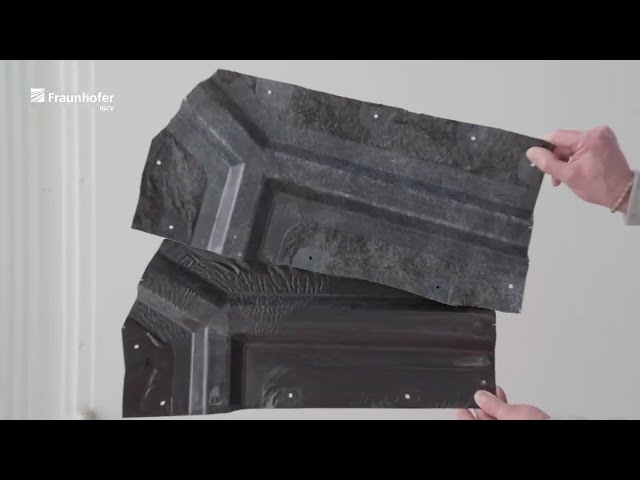
We design and manufacture high-performance CFRP prototypes, including helicopter sideshells and fairings. Depending on requirements, these are built as monolithic parts or with integrated sandwich elements, using thermoset or thermoplastic materials. With simulation-driven methods, we ensure load path–optimized designs for maximum efficiency and strength.

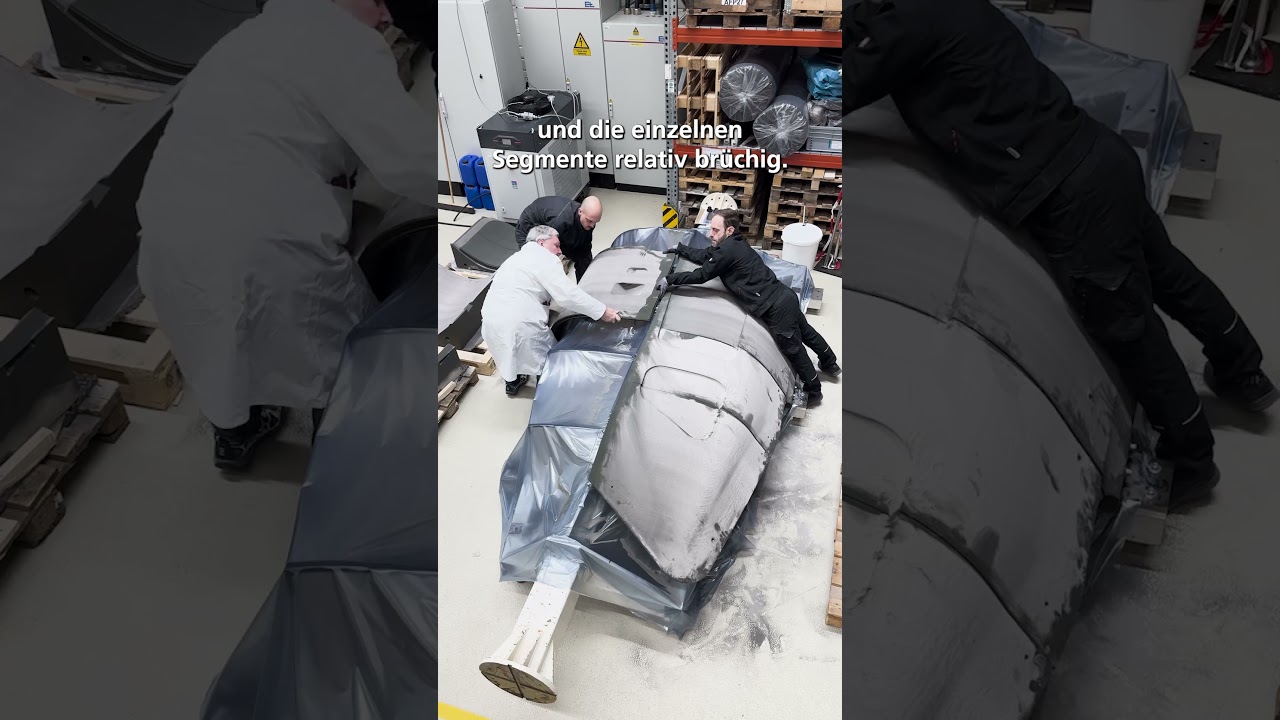
The innovative tooling solution utilizes 3D-printed helicopter shell elements made of sand by binder jetting, which are then assembled and impregnated with epoxy resin using vacuum infusion.

The Airbus Helicopter Racer was used as an example to demonstrate how automated fiber placement processes can be used to manufacture complex sandwich structures. In addition, the path generation algorithms for the deposit were optimized so that the quality requirements for the deposit could also be met in the area of the sandwich ramps. Further, we implemented an tooling process using 3D-printed sand forms for large scale molds and toolings reducing the prototyping costs in early development by 80% (see image on the left).

Primary structures for aviation applications

Fraunhofer IGCV works with its partners to develop aircraft fuselage components (rear structures) and qualifies the processes and construction methods together with its partners. This includes classic thermoset structural components as well as thermoplastic process routes optimized for higher cycle rates for future aircraft programs. Our processes are characterized by high manufacturing quality, robustness, and consistent design for manufacturing (DfM). 


Fraunhofer IGCV played a key role in the development, process qualification, and series introduction of the automated fiber placement process for the door frame structures in the A350-1000 (see image). Based on this work, the classic titanium door frame structure was converted to CFRP, resulting in double-digit cost and weight savings.

Tuerspant A350
© Fraunhofer IGCV
The A350 door surround structure—a success story

Fiber placement for aerospace

Manufacturing of a satellite hub structure

Space travel poses particular challenges for the implementation of structural components. Its many years of expertise in multi-material 3D printing and composite manufacturing processes make Fraunhofer IGCV an ideal partner for the high-quality production of complex structural elements. Using the example of the satellite carrier structure, Fraunhofer IGCV developed a weight-neutral monolithic CFRP structure compared to the classic sandwich construction. The advantage of the monolithic design is a significantly reduced qualification of the inserts, which made it possible to start equipping the satellite six months earlier (see image). Thus, accelerating the manufacturing and equipment process for satellite structures.

Hydrogen tanks, tank interfaces, and fuel lines

We develop pressure vessels and fuel lines for cryogenic hydrogen storage, including the demonstrator for a LH2 pressure vessel within the ESA Phoebus project in cooperation with MT Aerospace using Automated Fiber Placement for load path optimized placement of the tapes (see image). Fuel lines for hydrogen and kerosene place special demands on weight, conductivity, tightness, and thermal resistance. The connections between the internal tank components and the pipe infrastructure in the aircraft or spacecraft also offer potential for weight optimization and leak tightness. Thanks to our manufacturing and materials expertise, we can respond specifically to the various requirements and provide our customers with comprehensive support in terms of layout and design.

 LH2-Tankdemonstrator / Feasibility-Demonstrator für die Entwicklung der schwarzen Oberstufe der Ariane 6
LH2- Feasibility-Demonstrator developed in the ESA Phoebus project.au

Sustainable high-performance components for aviation

Thin-walled, complexly shaped door shells with a thickness of just 1.2 mm; developed by Fraunhofer IGCV in Augsburg

At Fraunhofer IGCV, a novel material solution based on wet-laid nonwovens has been developed that is specifically designed to meet the requirements of complex aerospace structures. This is a structured wet-laid nonwoven that impresses with its high drapability and optimized impregnability, even when using highly viscous resins, and enables fiber volume contents that allow the material to achieve and exceed the performance of SMC. And all this at extremely low manufacturing costs. In cooperation with the DLR Institute of Construction and Structural Technology, this was used to produce an innovative helicopter door demonstrator that combines the advantages of lightweight construction, sustainability, and reliable high-performance manufacturing. The project was developed as part of the Bavarian aviation research program “Light,” coordinated by Airbus Helicopters Germany. Fraunhofer IGCV is thus setting new standards for the resource-efficient development of complex composite components while strengthening the competitiveness of sustainable aviation technologies.

Process Technologies—Smart manufacturing for lightweight and high-performance aerospace structures

Automated Fiber Placement (AFP)

Automated Fiber Placement (AFP) is a cutting-edge manufacturing technology used at Fraunhofer IGCV to produce high-performance composite components with unmatched precision and efficiency. Essential for aviation and space applications, AFP enables the creation of lightweight, structurally optimized parts that meet the highest safety and performance standards. AFP automates the layup of carbon fiber tapes; the process supports complex geometries and reduces material waste. This technology is a key enabler for fuel-efficient aircraft and next-generation space systems. Fraunhofer IGCV leverages AFP to advance innovation in lightweight design and sustainable mobility.

👉more info: Automated Fiber Placement

Automated Fiber Placement: Coriolis C1-2
© Fraunhofer IGCV
Automated Fiber Placement @Fraunhofer IGCV Coriolis C1.2 from Coriolis Composites

Press Processes

© Fraunhofer IGCV/ Thomas L. Fischer
Hot Press by Langzauner

At Fraunhofer IGCV, our state-of-the-art press opens new horizons for aviation and space applications. We transform high-precision preforms, produced via Automated Fiber Placement, into complex structural shapes such as aircraft frames with exceptional quality and repeatability. Beyond forming, our press serves as a versatile platform for material innovation: from wet pressing and resin transfer molding to thermoforming of advanced wet-laid nonwovens. These capabilities allow us to not only characterize and optimize materials under realistic process conditions, but also to support industry partners in developing lighter, stronger, and more cost-efficient solutions for next-generation aerospace structures.

📩  your contact: Steffen Geinitz

Pultrusion

Pultrusion is a continuous manufacturing process used at Fraunhofer IGCV to produce high-strength, lightweight composite profiles for structural applications. The process enables consistent quality and excellent mechanical properties, making it particularly suitable for long, load-bearing components.
In aviation and space applications, the combination of pultrusion and braiding (image) enables lightweight designs for fuel lines, contributing to weight reduction and improved fuel efficiency. Fraunhofer IGCV advances pultrusion technologies through material innovation and advanced process monitoring, covering both thermoset and thermoplastic composite systems.

👉more info: Pultrusion

Versuchsaufbau der Flecht-Pultrusion am Fraunhofer IGCV
© Fraunhofer IGCV
Research for braided pultrusion

Bending Technology for Thermoplastic Pultruded Rods and Pipes

Roboterunterstütztes Umformen von FVK
© Frauhofer IGCV
Bending technology for fiber-reinforced polymers

Fraunhofer IGCV develops an advanced bending technology for thermoplastic rods and pipes, enabling the efficient forming of complex-shaped pipes and 3D skeleton structures without compromising mechanical performance (see image). The technology is applicable to unreinforced, short-fibre-reinforced, and continuous-fibre-reinforced thermoplastics, with a particular focus on high-performance continuous-fibre-reinforced profiles, which are often manufactured by pultrusion. 
The process enables highly efficient, load-path-optimised structures by preserving fibre orientation and structural efficiency where reinforcement is required. It combines high design freedom with excellent recyclability, supporting both performance and sustainability, and unlocks new design potentials for integrated structures in aircraft systems.

👉more info: Bending Technology

Fiber Patch Placement (FPP)

Fiber Patch Placement (FPP) is an innovative, robot-based technology at Fraunhofer IGCV that enables precise placement of tailor-made fiber patches. Ideal for complex 3D geometries, FPP enhances structural performance while minimizing material use—critical for aerospace applications. This flexible process supports localized reinforcement and intelligent layup strategies, driving lightweight design forward. FPP empowers the development of customized, high-performance composite components for aircraft and spacecraft alike.

📩 your contact: Steffen Geinitz

Cevotec SAMBA – Prepreg Fiber Placement
© Fraunhofer IGCV
Cevotec SAMBA – Fiber Patch Placement

Wet-laid Technology

Fiber preperation for wetlaid nonwoven production
© A3/Christian Strohmayr
Fiber preparation for wet-laid nonwoven production

Wet-laid technology at Fraunhofer IGCV offers a scalable method for producing high-performant, fiber-reinforced nonwoven materials competing with SMC material in structural performance, but more homogenous and versatile in matrix usage (thermoset and thermoplastic). This process enables the use of short or recycled fibers, opening new possibilities for sustainable aerospace applications. The resulting preforms are ideal for lightweight structural parts with complex shapes. In aviation, wet-laid materials help balance performance, cost, and environmental impact—making them an asset for next-generation mobility solutions.

👉more info: Wet-laid Technology

Additive Manufacturing (AM)

Additive Manufacturing in Aerospace enables the layer-by-layer construction of lightweight, functionally integrated structures using metallic and polymeric materials. It supports rapid design iteration, internal topology optimization, and on-demand production of geometrically complex components such as lattice structures and embedded cooling channels, which are often not achievable with traditional subtractive methods.

👉more info: Additive Manufacturing

Testing an additively manufactured component

Material Competencies—Pioneering sustainable and high performance aerospace materials

Aerospace-grade Additive Manufacturing Materials

© Fraunhofer IGCV
CW106C and IN718 powder

Fraunhofer IGCV develops and qualifies advanced polymers and metal powders specifically engineered for aerospace additive manufacturing. These materials are optimized for structural integrity, thermal stability, and weight reduction—critical factors in flight applications. By tailoring material properties to meet demanding aerospace standards, we enable high-performance, lightweight components for aircraft and spacecraft. Our research supports faster design iterations, reduced part count, and next-generation mobility solutions.

👉more info: Additive Manufacturing

Sheet Moulding Veil with Reused Carbon Fibers

At Fraunhofer IGCV, we pioneer sheet moulding veils (SMVs) made with reused carbon fibers to meet the performance demands of aerospace applications. These composites combine high strength with sustainable resource use. Our process innovations enable reliable part production while closing material loops. The result: high-quality, cost-efficient components that align with the aerospace industry's goals for circularity and lightweight construction.

👉more info: Wet-laid Technology

Pyrolysierte Carbonfasern - recycelte Carbonfasern
© A3 | Christian Strohmayr
Recycled carbon fiber

Recyclability and Lifecycle Design

Eine Darstellung des Recyclingprozesses von Composites mit verschiedenen recycelten rCF-Fasern
© vegefox.com - stock.adobe.com
Recycling process with different carbon structures

Fraunhofer IGCV integrates recyclability and lifecycle thinking into the design of materials and processes for aerospace. We develop components with reuse, repair, and end-of-life recovery in mind—maximizing resource efficiency from production to disposal. This holistic approach supports sustainable applications without compromising safety or performance. Through advanced lifecycle engineering, we help the industry transition to circular, future-ready manufacturing.

👉more info: Composite Recycling

Services and Consulting for Aviation and Space

Technical Cleanliness for Aerospace Manufacturing

Ensuring purity and reliability in high-precision aerospace environments

Contamination Control in Composite Manufacturing

Fraunhofer IGCV develops cleanroom-compliant manufacturing processes to ensure the highest quality standards in composite production for aerospace. Precision handling, contamination prevention, and validated testing procedures are integrated to meet strict qualification requirements. This ensures structural integrity and long-term performance in safety-critical flight components. Our work supports clean manufacturing environments essential for next-generation aircraft and space systems.

👉more info: Technical Cleanliness

Ultrasonic cleaning system
Thermische Analyse einer Aluminiumlegierung in einer STA zur Ermittlung der thermophysikalischen Eigenschaften
© Fraunhofer IGCV / Andreas Heddergott
Cleanliness analyses

Technical Cleanliness Audits & Lab Analytics

We offer comprehensive cleanliness audits and laboratory analytics tailored to composite and fiber-reinforced material processing. Fraunhofer IGCV designs customized inspection systems for particle detection, residue analysis, and process validation. These services help identify critical contamination risks in production environments and ensure compliance with aerospace cleanliness standards. Our solutions support reliable, high-performance material and component quality.

👉more info: Technical Cleanliness

Design for Clean Assembly (DfCA)

...at Fraunhofer IGCV combines process expertise with design methodology to minimize contamination risks during component integration. By addressing cleanliness from the earliest design stages, we help ensure the long-term reliability of aerospace systems. DfCA principles are applied to reduce particle introduction, optimize assembly workflows, and meet demanding aerospace safety and performance standards.

👉more info: Technical Cleanliness

Technical cleanliness

Certification

© AI generated

Ensuring Flight-Ready Quality Through Rigorous Process Qualification

At Fraunhofer IGCV, process qualification for aviation and space is rooted in systematic validation and comprehensive material characterization to support type and flight approvals. In the EU-funded ProAir project, for example, we developed and automated the lay-up process for large CFRP helicopter shell components—optimizing parameters, validating laminate quality, and deriving characteristic material values essential for flight certification. Our capabilities extend through advanced measuring and testing technologies to analyze material behavior, process outcomes, and ensure conformity with certification standards. Whether adapting composite lay-up techniques or verifying clean process chains, our data-driven evaluations and pilot-scale validations provide the robust evidence base that regulatory authorities require for aircraft certification.

📩  your contact: Steffen Geinitz

Digitalisation and Model-Based Systems Engineering

Process Intelligence through LLM-Driven Automation

At Fraunhofer IGCV, we leverage cutting-edge AI technologies such as Large Language Models to capture, structure, and utilize process knowledge in aerospace manufacturing. LLMs support process standardization, generate documentation, and uncover best practices by analyzing large volumes of technical text and data. In areas such as composite manufacturing (e.g., automated prepreg lay-up for helicopter components), casting technologies, and digitally connected production chains, they enable efficient information processing and actionable recommendations. By combining intelligent assistance systems with digital process analytics, we bring Industry 4.0 capabilities directly into applied aerospace research and production.

Within projects such as »AMoBaCoD«, which aims to establish a model-based co-engineering environment and digital thread across the aircraft life cycle, and »TrustME«, where Fraunhofer IFAM and Fraunhofer IGCV collaborate with partners to develop trustworthy AI for quality prediction, image analysis, and flexible production planning in aerospace, Process Intelligence through LLM-driven automation plays an important role in leveraging process knowledge.


📩  your contact: Steffen Geinitz

© AI generated
© AI generated

Model-Based Systems Engineering for Next-Generation Aircraft Components

Our MBSE (Model-Based Systems Engineering) approach enables model-driven planning, simulation, and integration of complex aerospace development processes. From early research phases (TRL 2) to start of production, we support projects such as COBAIN for the next generation compact helicopter structures or the industrialization of structural components for the Airbus A350 with model-driven design and seamless digital process integration. By linking product design, manufacturing engineering and process simulation models with analysis and digital assistance systems, we create transparent, robust, and efficient development workflows across the entire value chain — from design to manufacturing and quality assurance. This system-level perspective strengthens Europe’s aerospace industry by accelerating innovation while ensuring reliability and sustainability.

📩  your contact: Steffen Geinitz

Let's Develop the Next Generation of Aerospace Together

Fraunhofer IGCV merges applied science with industrial relevance. From basic process understanding to technology transfer, we are your partner for innovation in aviation and space.

📩 Get in touch with our aerospace team today to collaborate or learn more.

Schlüsselbranchen Fraunhofer IGCV: Luft- und Raumfahrt
Aviation and Space

Reference Projects in the field of Aviation and Space

Cancel
  • Titelbild, Kachel, Icon zu Luft- und Raumfahrt
    © Frank Peters - stock.adobe.com

    Zero-emission aircraft present aviation with completely new development challenges. In the »AMoBaCoD« project, Fraunhofer IGCV and Fraunhofer IAPT are combining model-based design, production, and recycling processes into a comprehensive digital workflow. Semantic data models and automated AM design chains shorten development times and increase resource and cost efficiency.

    more info
  • Projekt zum Thema Composites

    The aim of CU GreenCeramic is to create a fundamental database for the use of regenerative raw materials in the production of carbon fiber-reinforced plastics (CFRP) and carbon fiber-based ceramic matrix materials (CMC). To this end, alternative process routes for the production of carbon fibers and matrices based on regenerative materials are being considered. The aim is to establish, consolidate and expand the visibility and acceptance of the use of CFRP and CMC from renewable raw materials (regCFRP and regCMC) in society, industry and politics.

    more info
  • Projekt zum Thema Composites

    »PulFlex« is developing a novel process chain for curved, continuous fiber-reinforced thermoplastic profiles. The aim is to create a lightweight, durable, and fully recyclable cross-member made of glass fiber-reinforced plastic for high-voltage power lines—achieved by combining PulBraiding and bending processes.

    more info
  • Infinity | High-performance tapes made from recycled carbon fibers for lightweight construction

    Greenhouse gas reduction through high-quality recycling processes and materials

    Titelbild, Kachel, Icon zu Luft- und Raumfahrt
    © Frank Peters - stock.adobe.com

    The production of new carbon fibres is based on fossil raw materials and is very energy-intensive, making the recycling of the fibres all the more important. In the "Infinity" project, the fibre-friendly recycling process is demonstrated by means of a thermoplastic, structural component from the aviation sector, which can also be used to demonstrate material substitution.

    more info
  • MAI ÖkoCaP

    Economic, technical and life cycle assessment of recycled carbon fibers in industrial processes.

    Projekt zum Thema Nachhaltigkeit, Copyright: vegefox.com - stock.adobe.com
    © vegefox.com - stock.adobe.com

    Decision-making basis for the use of recycled carbon fibers: The central objective of the MAI ÖkoCaP project is to establish a reliable and transparent basis for decision-making that allows the benefits of using rCF in different industrial applications and products to be estimated.

    more info
  • Titelbild, Kachel, Icon zu Luft- und Raumfahrt
    © Frank Peters - stock.adobe.com

    NATUR addresses lightweight construction methods and technologies for CFRP fuselage structures that contribute to reducing the global warming potential (GWP) along the entire process chain through the consistent use of material residues, recycled carbon fibers (rCF) and out-of-autoclave (OoA) prepregs, as well as associated energy-reduced production processes and systems. The focus is therefore on optimizing component design and production planning for a sustainable material cycle, as well as energy- and emission-optimized production control. The weight reduction also makes a significant contribution to reducing the environmental impact during the aircraft's service life.

    more info