Battery Technology

Batteries as a key technology for a successful energy transition

Batteries are much more than just energy storage devices—they are the key to a climate-neutral future and to the success of German industry in global competition. Together with our partners at Fraunhofer IGCV, we are actively shaping this future: from material development and automated cell production to sustainable circular economy. Only with performance and safe battery systems can mobility, production, and heat supply be reliably converted to renewable energies.

A reliable power supply is important for the energy transition to succeed. Therefore, batteries must become even more efficient, environmentally friendly, and sustainable in the future. This includes increasing their storage capacity without making them larger or heavier, shortening charging times, extending their service life, and continuously optimizing safety, for example by minimizing thermal overload. A great deal of research and development work is needed here, which is precisely why research scientists at Fraunhofer IGCV are conducting research into the manufacture of different battery cells and storage systems.

Innovation platform for industry and SME

Battery research requires knowledge from various scientific fields. Large companies often have their own research departments, while SME have limited resources. This is exactly where Fraunhofer IGCV comes in: our platform gives regional companies the opportunity to actively participate in the energy storage market, develop attractive business models, and thus contribute to Germany's energy sovereignty.

Research and development platform for batteries: partnering for innovation leadership in battery manufacturing

We support companies from Bavaria and all over Germany in developing and implementing battery solutions that are safe, efficient, and sustainable.

With our innovative battery platform, funded by [sponsors to be named], we enable companies to test their innovations in the early development phase and adapt them to different cell and storage formats in a modular and flexible manner. In this way, we promote practical solutions that optimize energy density, charging speed, and safety—for a reliable, resource-efficient energy supply.

Your path to technological leadership in battery manufacturing

Are you developing batteries or working in the energy storage industry? Then work with us. Use our battery development platform for your technological challenges and innovations.

Our offering covers the entire development cycle: we can support you from the initial idea through to the design and a functional prototype. We enable you to implement new battery concepts in functional sample cells and work with you to research new ideas. This allows you to identify risks early on, make informed investment decisions, and significantly shorten your development times.

We work cooperatively on an equal footing and understand your challenges: cost pressure, international competition, and high quality requirements. By partnering with our team, you benefit from cutting-edge research, experience, and expertise to develop more performance-oriented, longer-lasting, and more sustainable batteries.

Research and development platform for batteries: How do we work?


From the idea to the design to the prototype.
From the cell to the storage unit.
– safe, efficient, and future-oriented.


Our battery development platform considers the entire process—from the initial idea to the design and finally to a functional prototype. Innovative battery concepts can be developed into real sample cells using our development platform – saving you extensive initial investments in infrastructure, annexes, HR, or processes, for example. You receive a holistic view of the process chain and value creation from a single source – fast, flexible, and scientifically sound.

The focus is on the systematic investigation of design concepts for their technical and economic feasibility.

Through the targeted use of proven methods, digital models, standardized workflows, and real-world test platforms, the platform enables fast, flexible, and sustainable development cycles; it links specialist disciplines, promotes data-based decisions, and realizes performance, resource-efficient batteries. Results and decisions are documented in a binding roadmap. Risks are identified at an early stage, investment decisions are secured, and development times are significantly reduced.

Our services for manufacturing:

  • Digitalization of cell production through the use of AI-based methods
  • Statistical data analysis of battery cell production using sensors
  • Holistic view of the manufacturing process through intelligent, end-to-end process monitoring across all manufacturing steps
  • Operating strategy for battery storage systems based on artificial intelligence and machine learning
  • Automated processes and a digital infrastructure for the development of battery materials and new cell technologies
  • Transfer of innovative battery cell concepts into industrial products
  • Flexibilization and modularization of production facilities and development of novel concepts for a more sustainable use of resources

Increasing efficiency with less resource consumption

Flexible automation processes are used to make these processes more efficient. These range from new digital methods for networking production facilities to the use of robots. Although programming these robots takes time, it is intended to save resources in the later production process. Robotics and automation technology are primarily used in memory assembly. This means that various production, handling, and contacting steps are necessary from the finished cell to the pack. At Fraunhofer IGCV, these steps are semi-automated and supported as flexibly as possible with appropriate robotics technology. For a fast and economically successful market launch of new cell generations, the simultaneous development of related technologies in all sub-areas is important. The focus here is on implementation speed and variety.

Our tools and features to support your battery development

  • Proof of feasibility
  • Proof of concept
  • Acceptance testing, certification, and validation
  • Additive-manufactured hand case cell
  • Lifetime and performance characterization of all cell formats
  • Tear-down analysis
  • Data analysis and modeling
  • Validation and optimization of cleaning processes
  • Substrate analyses and assessments
  • Particle definition down to 10 µm
  • Heuristic design loops

How does the research and development platform for batteries work?

From the first slurry to the tested storage unit – our development platform guides you through four interlinked modules to a marketable battery system.


Module 1: Electrode production: Here we optimize formulations and coatings. The aim is to produce electrodes with high performance, reproducibility, and process reliability that form the basis for high-quality cells.


Module 2: Cell assembly: Here, we develop and optimize new cell designs and mechanics using rapid prototyping. Both pouch cells and round and prismatic hardcase cells are implemented and analyzed.


Module 3: Module and system design: Here, we combine the cells into packs that are easy to assemble and recycle. Electrical, thermal, and mechanical aspects are integrated into a functional overall system.


Module 4: Performance & monitoring: Here, both cells and storage devices are characterized and tested for service life, safety, and compliance with standards.

Electrode production

  • Variable cell chemistry (LIB, SiB, polymer, FKB)
  • Roll-to-roll-capable coatings and calendering processes
  • Analysis and characterization

Cell-assmembly

  •  
    • Variable cell types (pouch, round, prismatic)
    • Rapid prototyping for cell components
    • Focus on cell design and mechanics

Module and system design

  •  Cell contacting (laser/ultrasound)
  • Design for usability/recycling
  • Implementation analysis

Performance and abuse-testing

  •  Characterization of electrode, cell, and storage device
  • Cycling, EIS, DCR, degradation behavior
  • Safety and misuse tests according to UN 38.3
More info – What is a battery/battery cell/battery storage device?

What is a battery?

A battery supplies electrical current. It consists of various chemicals that generate electrons. These can be lithium, cobalt, nickel, manganese, or graphite, for example. A battery always has a positive and a negative pole. When these poles are connected via a lamp, for example, they exchange electrons. This causes current to flow.

What is a battery cell?

A battery cell is the smallest entity of a battery. It is the energy storage unit. In electric vehicles, several battery cells are connected together to form a battery pack in order to achieve the required amount of energy. During discharge, the stored chemical energy is converted into electrical energy.

What is a battery storage system?

Battery storage systems store currently available energy for later use. They can store energy electrically, chemically, or mechanically.

How is a battery manufactured? Structure and production of the battery cell

Mixing

The mixing process marks the start of battery electrode production. The starting materials for this are powder materials and solvents, which are mixed together in the first step of the process. This produces an electrode paste—known as slurry—which is then used in the coating process.

Coating and drying

In the coating process, the previously produced slurry is applied to a metallic carrier foil using suitable methods. The coated electrode foil is then dried. This completes the initial production of the electrode.

Calendering and laminating

In the calendering process, the electrodes are compacted by two rollers. This adjusts their mechanical and electrochemical properties. In this way, existing performance parameters of batteries, such as their energy density, can be improved. The laminating machine can be used to laminate lithium foil onto copper foil.

Cell assembly

During cell assembly, the manufactured electrodes are used to produce fully functional battery cells in a series of different process steps.

Storage assembly

Flexible devices at Fraunhofer IGCV enable the construction of prototype cells in different types, formats, and sizes. The results include round cells, pouch cells, and prismatic cells.

The finished battery cells are then installed at Fraunhofer IGCV for their intended purpose and directly integrated into the module and battery storage units (packs).

Polymer solid-state batteries in particular promise great benefits for a wide range of applications. However, in order to meet the increasing demands on storage, Fraunhofer IGCV not only processes classic lithium-ion batteries but also innovative materials such as solid-state batteries and sodium-ion batteries. The various storage and cell capacities have different advantages and disadvantages depending on the application and can be designed as flexibly as possible depending on the specific use case.

Forming and cell testing

In a kind of final inspection, machine data and material properties are recorded and evaluated using suitable measurement methods to assess the quality of the products and processes.

Forming, cycling, and testing the performance of cells, as well as safety tests on new battery cells, modules, and packs, are an essential part of any battery production. In particular, every new system must pass the abuse tests according to UN 38.3. Special test laboratories in the form of concrete bunkers are being planned outside the TZ10 for these and other safety-critical tests.

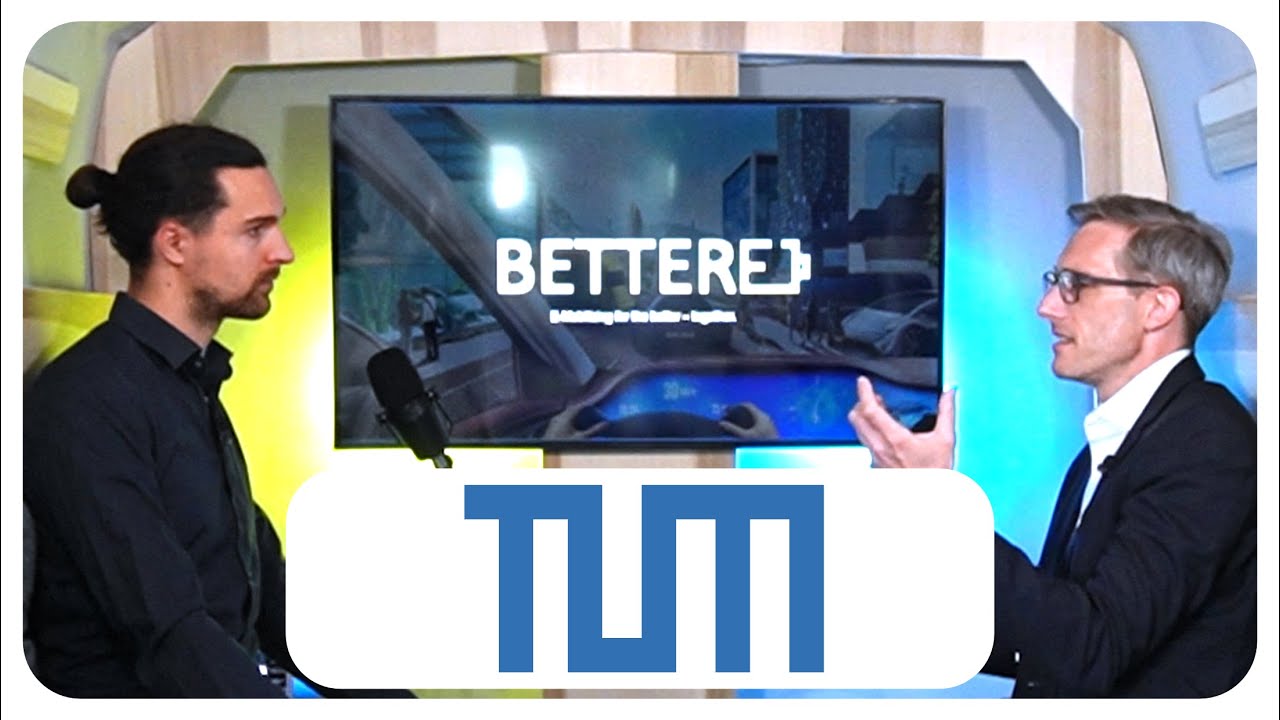
»BETTERExpedition«

Prof. Rüdiger Daub in an interview with Simon Voß on the future of battery production


The future of battery technology won’t be decided by chemistry alone. Only by aligning materials, design principles, and production methods from day one can we build cells that perform at scale and meet the demands of next-generation mobility


Summary of the interview:

Scalable battery production requires that new cell chemistries are compatible with high-speed roll-to-roll manufacturing. Many materials perform well electrochemically but fail in industrialization because they cannot be processed reliably or cause high scrap rates, so manufacturability and total cost impact must be assessed alongside performance.

High-nickel chemistries have become producible through improved coatings, while solid-state batteries—especially sulfide-based—remain promising but not yet roll-to-roll ready, with dedicated equipment and assembly methods still under development. The cell itself is the key lever for progress. Cell design and production are tightly interdependent and must be developed together, which is why generic “commodity cells” have not succeeded in high-performance applications. Only simultaneous engineering of chemistry, cell design, system integration, and production processes ensures batteries that are industrially viable, high-quality, and optimized for their application.

Privacy warning

With the click on the play button an external video from www.youtube.com is loaded and started. Your data is possible transferred and stored to third party. Do not start the video if you disagree. Find more about the youtube privacy statement under the following link: https://policies.google.com/privacy

Further projects and offerings in the section of battery production

Fraunhofer IGCV in the context of the Fraunhofer Research Institution for Battery Cell Production FFB:

Together with partners from research and industry, Fraunhofer IGCV is part of the Fraunhofer Research Institution for Battery Cell Production FFB. In the group, innovative battery cell concepts for industrial products are developed and new and innovative production processes are promoted.

The focus is on making production facilities more flexible and modular and developing novel concepts for a more sustainable use of resources. On this basis, the aim is to strengthen the cell production of lithium-ion batteries.

Both industrial companies and research partners can benefit from the project's results. With its research into electrode manufacturing, cell assembly, conditioning, testing, and qualification of round, pouch, and prismatic hardcase cells, the FFB aims to become the German development center for battery cell production.

Fraunhofer IGCV supports battery cell research primarily through its expertise and experience in the field of processing technology. In the context of battery cell research and production, we are mainly responsible for aspects of Factory Planning and Evaluation, production management, and plant and control technology. With its participation, Fraunhofer IGCV is contributing its part to the economic and ecological production of battery cells and thus to a resource-efficient future.

The following video shows examples of Fraunhofer IGCV's work within the Fraunhofer FFB. Five use cases demonstrate the advantages of material flow simulation for logistics and production using the example of battery cell production:

European Battery Cell Learning Lab: Continuing education for beginners and advanced learners

At the European Battery Cell Learning Lab (ELLB), experts from the Fraunhofer Research Institution for Battery Cell Production FFB at the location Münster offer continuing education for beginners and advanced learners on the large-scale production of battery cells and rechargeable batteries.

Fraunhofer IGCV research projects on battery storage technologies

KIproBatt

Intelligente Batteriezellfertigung mit KI-gestütztem Prozessmonitoring auf Basis einer generischen Systemarchitektur

REIF

Potenziale von KI zur Optimierung der Plan- und Steuerbarkeit der Wertschöpfung in der Lebensmittelindustrie: REIF (Resource-efficient, Economic and Intelligent Foodchain).

Smart B4P

Erforschung neuartiger Betriebsstrategien mittels KI für mehr Energieflexibilität bei produzierenden Unternehmen.

DiBatma-pro

Aufbau einer anwendungsorientierten, teilautomatisierten Produktionslinie für polymere Festkörperzellen mit digitalem Zwilling.

Fraunhofer IGCVirtuell

Titelbild, Kachel, Icon zu Querschnittslösungen
© Fraunhofer IGCV | Bernd Müller

Virtual tour of Fraunhofer IGCV

Take a virtual tour to learn more about how we translate our research in the production environment into industrial applications and state-of-the-art plant technology!

To the tours